
🎬 Multilingual subtitles
✍️ By: Team BC1.NL


The Global Rise of the Circular Economy
Circular economy is a term we hear more and more often. Not only because of stricter environmental requirements from governments, but increasingly because more and more businesses recognise the economic opportunities of reuse and sustainability. This transition is unfolding worldwide. But what can organisations working on circular innovation in different countries learn from one another? Are they running into the same challenges when it comes to closing the loop?
The Circulator, Collaboration Across Borders
The Swiss platform The Circulator brings together international pioneers in the circular economy. By discussing challenges and sharing knowledge, the platform helps companies grow faster. Alongside the well-known Circulator Talks, which focus on sustainable business models, the platform will host the Circulator Forum at the end of 2026. This two-day live event combines circular practice and networking with powerful media productions to give these sustainability stories a global stage.
Circulator Talk, on a waste-free future
BC1® and The Circulator share a common mission: to spread inspiring stories about sustainability far and wide. That is why this episode of the Circulator Talks series can now also be viewed on BC1.eu.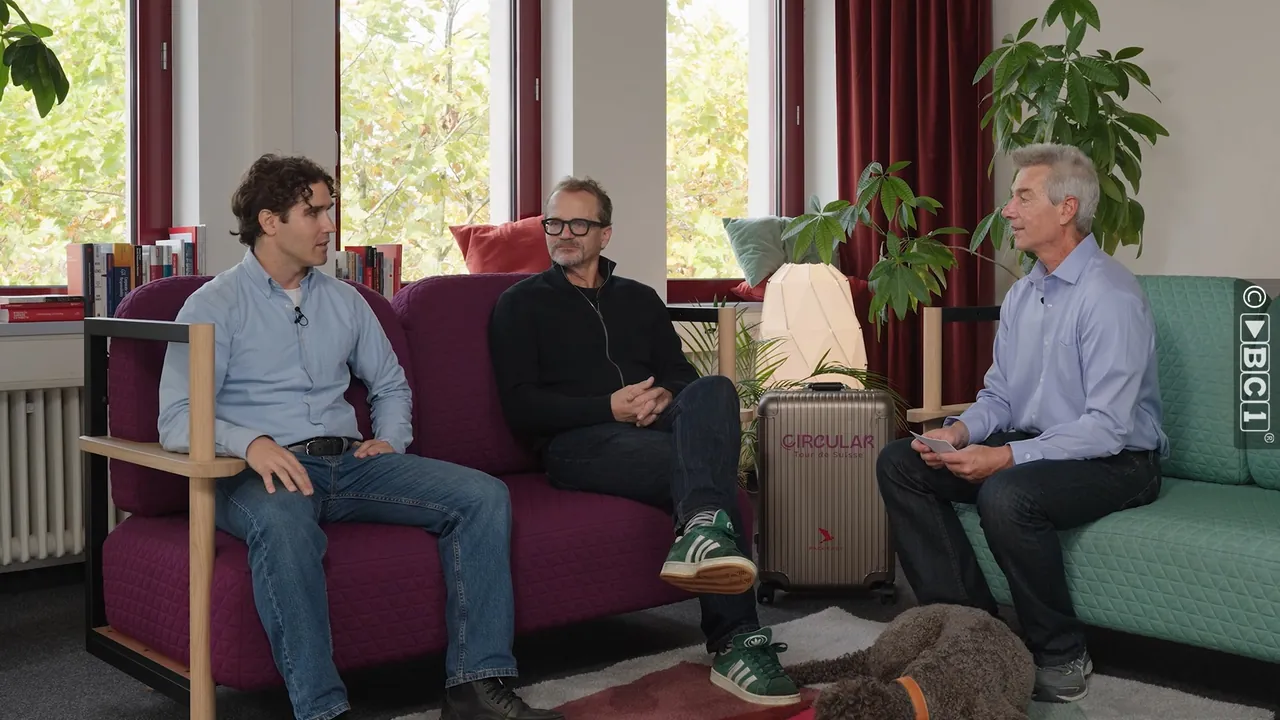 In the video "A Bold Vision, Real Projects: Circularity from Basel to Texas", we meet Gabriel Eckenstein of BaselCircular and Christopher Moken of Circular San Antonio. They talk about how their organisations got started and share their vision for a waste-free future. More stories on circular innovation can be found in the documentary "Flevoland makes room for circular entrepreneurship".
BaselCircular, Innovation Ecosystems in Switzerland
In Basel, Switzerland, BaselCircular is working to build a nationwide network of innovation ecosystems. The organisation supports established companies in their transition to circular principles and helps startups scale up their business models. Universities and research institutions also play a role in this effort. What started as an idea within Gabriel's family, together with his brother and sister, has been a journey of some twenty years. By now, the next generation is involved as well. What makes their story remarkable is that the family had just acquired the Franck Areal to turn it into a circular initiative, when the Canton of Basel-Stadt was formulating its own ambitions around the same time, with the goal of net zero greenhouse gas emissions by 2037. The initiative gained a much broader foundation overnight when the city approached them for a public-private partnership.
Circular San Antonio, Reuse in the United States
A great deal is happening in this field in the United States as well. Circular San Antonio was founded in 2023, a non-profit dedicated to accessible and equitable reuse. Its focus lies on food systems, the built environment, and economic innovation. Through international Sustainability Delegations, study tours that take American professionals to circular examples in Denmark, Sweden, Switzerland and Germany among others, the organisation aims to tackle systemic waste issues on a global scale. A concrete example is the Material Innovation Center they intend to establish: a place where building materials from demolished homes are stored and prepared for reuse. San Antonio is, in fact, the largest city in the US with its own deconstruction ordinance (the circular dismantling of buildings), so the foundation is in place. The centre is ultimately intended to become an exemplary building that is itself constructed circularly. This touches on a bottleneck found in many American cities, where the housing crisis and the waste problem intersect.
The same challenges on two continents
"Circularity is not a regional matter, it is a global matter," says Gabriel. And that is precisely why a Swiss and an American are sitting at the table together in Basel.
Where is your organisation on its circular journey? Let us know or share your own project through our platform.


