🎬 Multilingual subtitles
✍️ By: Team BC1.NL


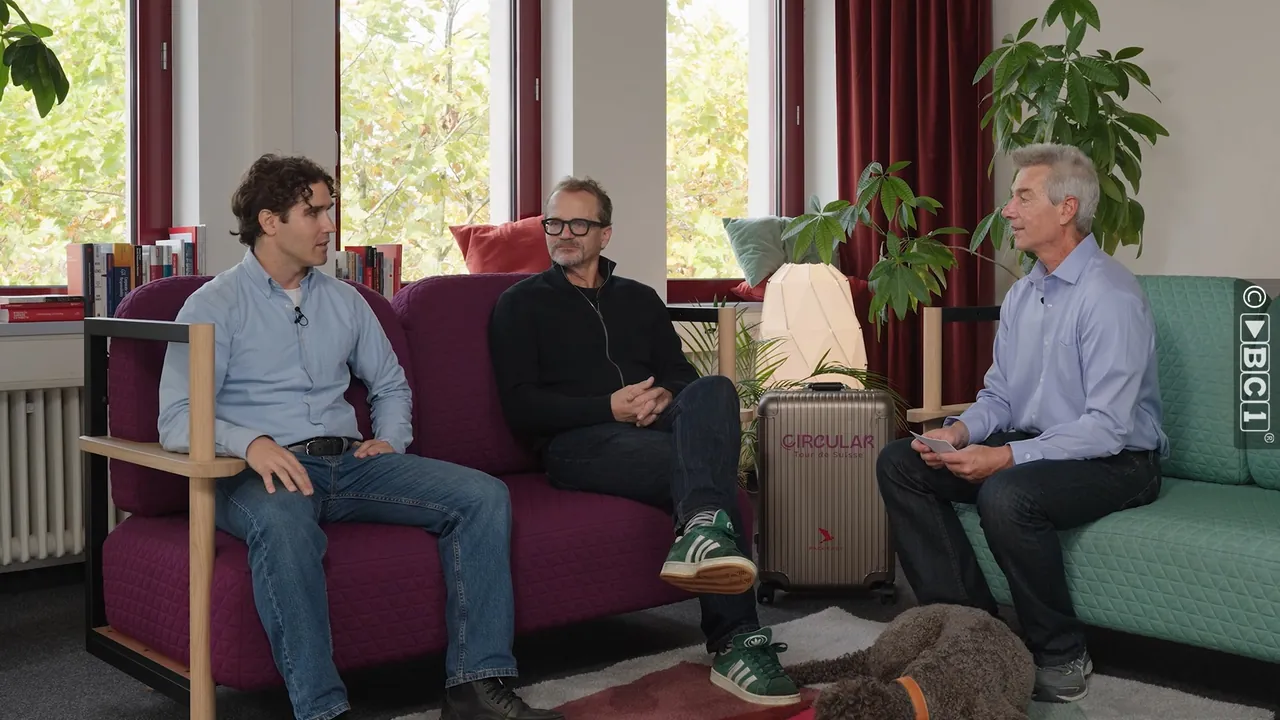
At the Hoogheemraadschap Hollands Noorderkwartier in the Netherlands, we interviewed Yede van der Kooij from Wetterskip Fryslân and Erik Pijlman from KNN Cellulose. They spoke about the many opportunities that wastewater offers.
Why would a water board take toilet paper out of the sewer?
Water boards purify wastewater and have nothing to do with asphalt. But wastewater contains many raw materials, and for that the Energy and Resources Factory was set up, a think tank and network to extract them. Phosphate, for example, but also toilet paper. Take it out beforehand and less energy is needed for purification, because it no longer has to be broken down. And once it is put to use afterwards, it is no longer waste but a raw material.
How does paper end up in asphalt?
In the From Waste to Asphalt project, two major sectors of the Dutch economy were connected: the water sector and the civil engineering sector. The sieve residue recovered from wastewater consists of about 70 percent cellulose, and it is prepared so that it can be used as a product in asphalt.
Has this been done before?
No. Recovering cellulose from wastewater is a new development in the water sector, and applying it in asphalt has, according to those involved, never been achieved anywhere in the world. Production is already happening; the next step is to develop it into a fully grown market.
The Energy and Raw Materials Factory looks for new raw materials
Yede van der Kooij explains that the Energy and Raw Materials Factory was established by the Water Boards. Here, a team of water experts is investigating what can be done with various substances released during wastewater treatment. For example, they are exploring whether these substances can be reused as new raw materials or converted into energy. Research is being conducted, among other things, into recycling diapers and converting glucose into bioplastics.
From Waste to Asphalt connects companies and water boards
Erik Pijlman proudly talks about the project ‘Van afval naar asfalt’ (From Waste to Asphalt), or VANA for short. KNN Cellulose plays a key role in this project, facilitating connections between the business community and the Water Boards. Yede van der Kooij enthusiastically explains why it is so important to remove toilet paper from wastewater, and how it can be effectively used as a new raw material in asphalt.
Wanted, companies that can use these raw materials
What clearly emerges is the strong need for companies willing to utilize the raw materials that the water boards can provide. Such collaboration is a significant step toward a more circular economy.