🎬 Multilingual subtitles
✍️ By: Team BC1.NL
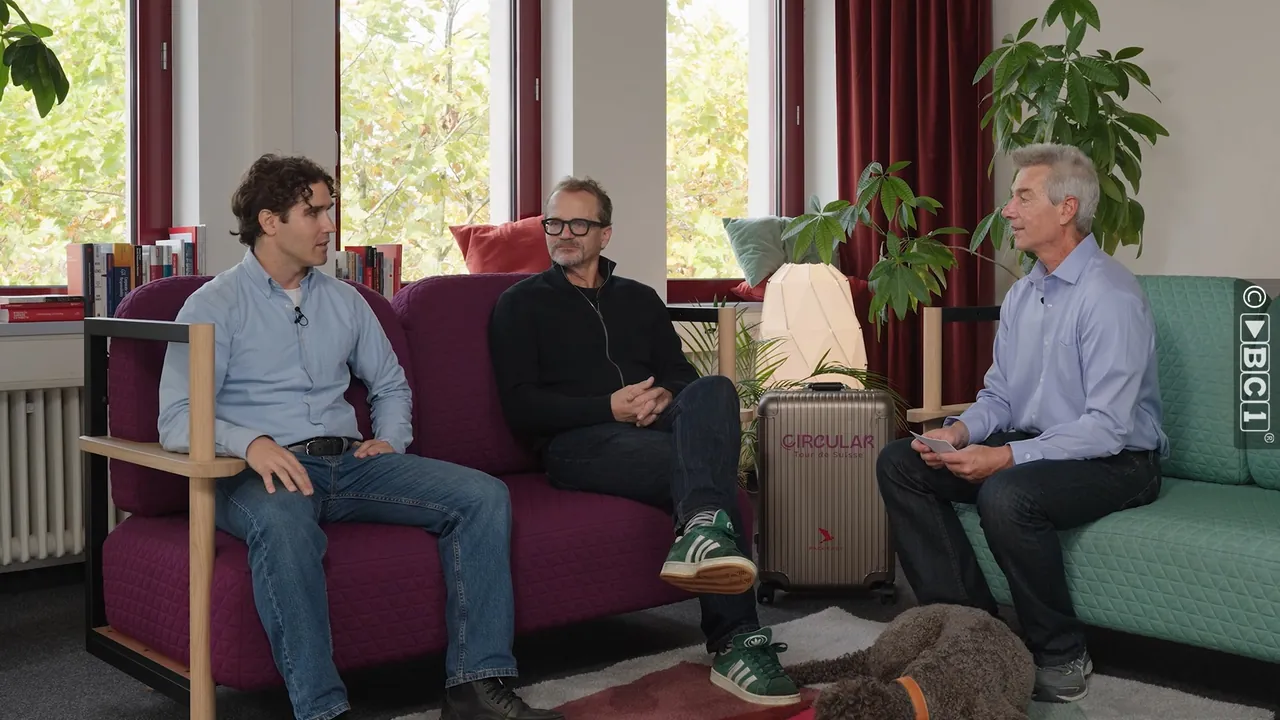
What needs to be done to reduce the growing mountain of plastic waste? In the documentary Plastic: The Raw Material, we seek answers.
Documentary Plastic the raw material
What opportunities do entrepreneurs and experts see for reducing plastic waste? What new ideas and innovations are emerging? Join us on a journey into the minds and actions of changemakers.
Bioplastic from potato waste and from sugar cane
 Plastic made from residual materials from the French fry industry or bioplastic derived from sugarcane, it exists and is less harmful to the environment than petroleum-based plastics. We meet innovative entrepreneurs like Damir Perkic of BE O Bottle, who developed a design water bottle made from sugarcane. BE O stands for be circular.
Packaging, the champion of plastic usage
Nearly everything new comes wrapped in plastic. As the primary packaging material, plastic dominates the market, which is why we visit the Empack trade show, to seek out sustainable companies. One such innovator is Nutripack, which developed the Eco-Tray, a packaging solution using 90% less plastic.
Where companies get advice on sustainable packaging
 We also visit the Knowledge Institute for Sustainable Packaging in the Netherlands (KIDV), where companies aiming for sustainable packaging can seek advice. The Recycle Check offers guidance to entrepreneurs, and the KIDV helps foster connections within the supply chain.
Why is plastic the raw material?
Used plastic has value, therefore it is a new raw material. New products can be made from old plastic. At VanWerven Recycling, we see how mountains of discarded plastic are sorted and reused. Here waste becomes a new raw material.
Living in a plastic society
Plastic is an integral part of our lives, and its use continues to grow, that’s a fact. In “Plastic the raw material,” we travel alongside entrepreneurs and experts who aim to reduce environmental impact. We discover initiatives that are sometimes in their infancy and others that are surprisingly large-scale.
Companies featured in this documentary are from the Dutch provinces of Flevoland, Gelderland, North Brabant, North Holland, Overijssel, and South Holland.
Also interesting:
Hydrogen the documentary
Circular 3D printing
Frequently asked questions
This is a short summary of the film. Watch the video above for the full story.
Why can't different types of plastic be recycled together?
Each type of plastic has its own specifications, such as a different melting temperature, impact resistance, strength and flexibility. If you process them mixed together the result is worthless and you can only make a thick post or plank from it, whereas that is not what is ultimately being sought.
Can you make a drinking bottle out of sugar cane?
The BE O bottle is a reusable water bottle made from plastic derived from sugar cane, developed by Damir together with injection-moulding company Hollarts. The bottle can withstand boiling water and is dishwasher-safe, can theoretically last 400 years, can still be recycled afterwards, and by sliding together it saves 40% of space.
What is PEF and why does it perform better than PET?
PEF is a plastic similar to PET, but both of its components can come from biomass, for example from glucose made in Delfzijl out of wood chips. PEF has better barrier properties, so CO₂ escapes the bottle more slowly and oxygen enters less easily, it breaks down when it ends up in the environment, and it can be recycled in the same way as PET.
How do you make a plastic package easier to recycle?
By making a package from a single type of plastic as much as possible instead of multiple materials, so it ends up in the correct material stream during sorting. Colour also matters, black packaging is sorted out less well or sometimes not at all, and a label that comes loose during processing rather than being glued on makes recycling easier.
How is plastic made?
Most plastic today is still made from crude oil, and the film is clear about that. It also shows the other routes, from sugar cane and from wood. Turning that raw material into a product happens in two ways in the film. At an injection moulding company it starts with the customer, where the wishes and requirements are set out first and a moulded product is made from them, in all shapes and sizes. The other route is the bottle. Granules come out of the polymerisation process, are melted in an extruder and pressed into a mould to form a preform. That preform is then heated again and blown into a mould, and out comes a bottle.
How does plastic waste become a raw material again?
By keeping it clean and separated. The less contamination the better, because genuine waste can no longer be turned into plastic granulate. That is why design is shifting too. Where plastics used to be developed for functionality, they are now developed for recycling and reuse.
Where can I watch the full film?


 We also visit the Knowledge Institute for Sustainable Packaging in the Netherlands (KIDV), where companies aiming for sustainable packaging can seek advice. The Recycle Check offers guidance to entrepreneurs, and the KIDV helps foster connections within the supply chain.
 Companies featured in this documentary are from the Dutch provinces of Flevoland, Gelderland, North Brabant, North Holland, Overijssel, and South Holland.